
The day doesn’t have to follow you home from work
We’ve all been there. Your Brain is Stuck in Work Mode and you can’t seem to switch off.
Well, it doesn’t have to be like that.
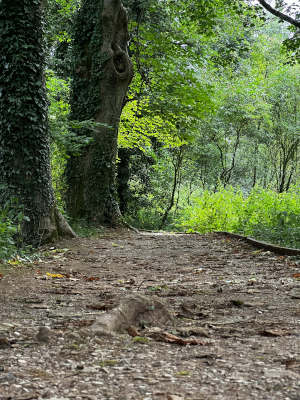 In this post, I’ll give you some free, easy and local ways to let nature lift all the stress from your body. Shall we get into it?
If you’ve ever finished a long day at work and found it nearly impossible to switch off? (And I guess you have, other wise why would you be here?) You’re not weak or unable to “just relax.”
The real reason? Your nervous system hasn’t received the clear “the work day’s over” signal, it desperately needs.
But here’s what I’ve learned (from years as a therapist and my own personal struggles), nature offers that signal, and surprisingly fast.
What can I do outside for 15 minutes, to relax after a stressful work day?
Studies show, that just 15 to 20 minutes spent outside can significantly lower cortisol – your body’s main stress hormone.
Spending time in nature calms that part of your brain that gets stuck in a worry loop, and shifts your body’s entire system from “alert” mode to “rest” mode.
And the best part? You don’t need a plane ticket, a lot of free time, or even a detailed plan.
Below are 10 super-simple things you can do in your local area, and cost absolutely nothing. Some will even feel laughably simple – and that’s exactly the point.
Big things happen through small, consistent actions. These simple acts are the building blocks for a calmer life.
10 Ways to De-Stress After Work
1. Take a “No Purpose” Walk. Head to your nearest park or green space for a slow, meandering stroll. Forget power walking or listening to podcasts. Just amble. Notice the colours of the leaves, the sound of your footsteps, the sky above. Slow your pace down a notch or two and feel your shoulders drop.
2. Sit and Do Absolutely Nothing. Find a bench in a park, by a canal, or outside a church. Sit without your phone, without a plan, without a to-do list. A few minutes of genuine stillness can be a complete reset for an overstimulated mind. It sounds simple because it is simple. It’s effective because it’s so rarely practiced.
3. Watch Water Flow. Rivers, canals, streams, or even fountains in a town square have a scientifically proven calming effect on the nervous system. Stand or sit by the nearest body of water for a few minutes with soft eyes. Don’t analyse anything, just observe.
4. Breathe Under a Tree. Find a favourite tree and spend a few minutes breathing deeply. Try a four-count inhale, hold for four, and a six-count exhale. Trees also release phytoncides – compounds found in nature that have been shown to lower cortisol and boost immunity. You’re essentially inhaling calm!
5. Walk Barefoot on Grass. I know, it sounds a bit weird. But the feeling of cool grass under your bare feet instantly pulls you out of your head and into your body. It’s incredibly hard to maintain anxious thoughts while you’re focused on the texture of the earth. Even five minutes can act as a perfect full stop to your work day. Try it before you dismiss it!
6. Really Listen to Birdsong. Research suggests birdsong is a powerful natural cue for mental restoration. The next time you’re outside, close your eyes for a moment and try to identify how many different types of bird calls you can hear. It’s a focused, gentle form of mindfulness that’s easier than formal meditation.
7. Walk a Familiar Route, Differently. Take a path you use regularly – maybe your route to work, or the shops, and go a slightly different way. The familiar becomes unfamiliar, opening up new angles and nudging your brain, which was originally on autopilot, into paying actual attention. It’s a simple trick that offers fresh perspectives.
8. Mission: Find Something New. Give yourself a single, simple goal: find something in your local environment that you have genuinely never noticed before. It could be a patch of moss on a wall, a peculiar detail on a building, or the way a branch has grown around an object. This small act of curiosity combats the narrowing effects of stress.
9. Ditch the Earbuds. We’ve gotten really good at filling silence. On one of your walks this week, just once, resist the urge to overpower your brain with noise. No podcast, no music, no calls. Just listen to the sounds of the world around you: wind, birds, your own footsteps. It might feel uncomfortable at first – and that discomfort is a sign you need it! Stick with it, and the silence will settle into calm.
10. Watch the Sunset. That warm, soft light change just before sunset is one of the most beautiful and freely available gifts nature offers daily. Find somewhere with a view of the sky. it could be a hill, a park, a rooftop even. Then, simply watch the colours shift for ten minutes. This isn’t wasted time; it’s your body and mind doing what they were meant to do.
Your Weekly Challenge:
You don’t need to do all ten. Pick the one that feels most accessible right now, and try it for five evenings after work this week.
I’m sure you’ll find something here that really helps you to de-stress after work.
Before you head out though, take 30 seconds to check in with your body. How are your shoulders, jaw, and breathing feeling? Repeat the check when you get back and notice the difference. By the end of the week, you’ll have your own body-led proof that it works.
Small, consistent steps. That’s the start.
Summary
- Work Stress Lingers: Your nervous system won’t automatically switch off when you leave the office. It needs a clear signal that the work day is over.
- Nature is the Key: Being outdoors for just 15 minutes can reduce stress hormones and calm your brain.
- Simple is Better: These 10 ideas are free, require no special travel, and don’t take much time.
- Consistency is Crucial: Small, regular actions lead to big changes in how you feel.
- The perfect cure for work day stress is literally waiting outside your door. Just step into it.
I’d love to hear which of these resonates with you most, or whether you’ve tried something similar and noticed a difference. Drop it in the comments below.
And, if you find you have a bit more time to spare, why not check out my series of articles. Ideal for if you want to bring more nature based calmness into your life? The first part, is called… ‘Spending Time in Nature’
Take care in the meantime, and remember to always take the slow road.
