
Why I swapped my sofa for a campervan (and what it did for my mental health)
This is part 1 of a 5 part series.
An honest account of how one afternoon, showed me some of the benefits of spending time in nature, for mental health.
A few years ago, my wife and I were gifted memberships of the National Trust by our daughter. The sort of thoughtful, useful gift that you don’t expect to change very much in your life.
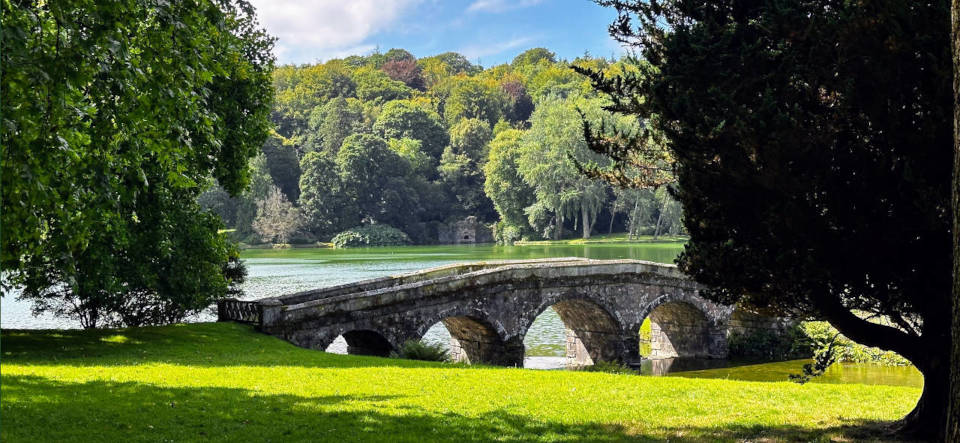
Our first visit was to Stourhead, in Wiltshire. If you’ve never been, you’ve truly missed a very special place, that will stop you in your tracks.
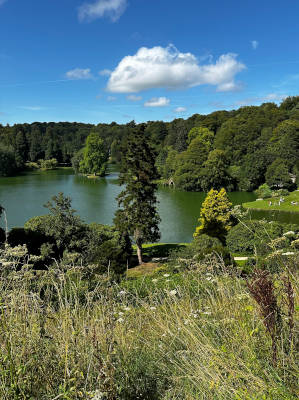 A sweeping landscape garden; a glassy lake at its heart; ancient trees reflected on still water; temples and seating areas dotted around the periphery, like something out of a dream.
We walked slowly; and we sat by the lake for a while. Our phones were put away and we didn’t talk of work, or the news, or of anything really. We just… were there.
And somewhere in the middle of it, I couldn’t tell you when exactly,I realised that the noise had stopped.
Not the surrounding noise around me, because nature provides its own harmonies, but importantly, the noise inside me.
That low, dull hum of pressure, unfinished thoughts, and things-not-done that I’d carried for so long that I’d stopped noticing its weight.
And on the way home that evening, I felt lighter than I’d felt in years.
Stourhead was where it all started. That’s where I first really felt the impact of nature on a stressed, over-burdened mind when you just let it in.
I had the knowledge. Nature gave me the proof.
You might need a bit of background, to explain why I ‘m writing about spending time in nature, for mental health.
Well, I was trained as a psychotherapist and CBT practitioner and have spent years writing, researching and advising about mental health. I understand the theory of stress responses, the role of cortisol, the nervous system – everything. I’ve even written a book about it 😉
And yet, it was that afternoon at Stourhead that first made the experience personal to me. My training gave me the reason why it was happening; the lake finally allowed me to feel it.
And it’s that combination – knowing the mechanism, and actually experiencing the effect, that I want to share with you over the next few articles.
Note: There’s overwhelming research to support the benefit of spending just 20 minutes in nature.
It reduces your cortisol (your body’s primary stress hormone), significantly. And it’s not about going away for weeks on end, or embarking on some big expedition. The benefits are quick to arrive and it’s available to almost everyone.
Just think for a moment, what a modern day looks like.
You get out of bed and reach for your phone. You probably spend most of your time indoors, generally staring at a screen. From the minute you open your eyes, to the moment you close them again, your mind is bombarded… notifications, news, demands, decisions, all happening at lightning speed.
Your brain, essentially, hasn’t changed much in 200,000 years and was built to deal with the world at walking pace. Out in nature, with integrated rest built into its design.
We now live lives that are ten times faster than our nervous system was designed for, and it’s hardly surprising we all seem permanently wired and unable to switch off.
What this series is about
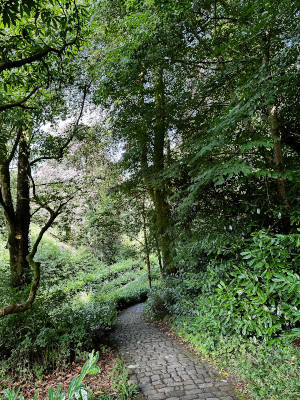 In the coming articles, I’m going to draw on my experience travelling the length and breadth of this country. Looking at everything from waterfalls, to castles, to ancient forests, and to peaceful lakes. I’ll give you a range of explanations, backed by research and my professional training for why spending time in nature for mental health, works.
We’ll explore:
- What exactly, is going on in your brain and body when you spend time outside?
- How different natural environments impact your mind and body.
- Why even 15–30 minutes can make a real difference to how you feel mentally.
- How you can actually switch off once you get there.
- How to make this a regular part of life, even if you can’t travel far.
Each article will finish with a small, simple action step you can incorporate into your week. It doesn’t matter where you live, or how little time you have. No campervan necessary 🙂
Remember though, this isn’t about saying that walking in the woods will fix everything. If you’re feeling particularly low then please go see a GP, or a psychotherapist, or simply someone you trust.</div>
But, if you’re feeling stressed, then nature is an option for you to experiment with this morning, at very little cost and with very significant benefits.
Your action step for this week
This is as simple as it gets, deliberately so. You don’t need to go anywhere exotic, you don’t need a lot of time and you don’t need any special gear, or plans.
Today, or tomorrow just step outside for between 10-15 minutes.
Go nowhere in particular, and try not to distract yourself by doing anything else. Put your phone on silent, or leave it at home. Turn off your podcast, or your music, and just walk.
Somewhere there’s green space would be ideal. A park, a garden, or just a walk down a tree-lined street, even round the block a few times will do. If you’re genuinely unable to get outside, sit by an open window for a few minutes and just ‘be’.
And before you set off, notice the feeling in your shoulders. Then notice the feeling in your jaw. Is it tight or relaxed? And finally, what’s the quality of your breathing – shallow and rapid, or deeper and slower?
When you come back in, stop, and notice your shoulders, your jaw and your breathing again and see how it feels now. I think you’ll be surprised.
If you want to stretch it a little further:
Leave your phone totally alone, and that means resist any temptation to take photos, or check messages, etc.
Choose just one aspect of your environment: a sound, a smell, the feeling of the air on your skin, etc. to notice throughout your walk.
And finally, if you can, try to practice at the same time each day for a week, and see what you discover happening to your feeling of well-being.
Small, consistent steps. That’s how it starts.
Summary
- Spending time in nature for just an afternoon in Stourhead showed me what nature can do to a stressed mind when I allowed it; the mechanism for this I knew through my training but had never personally experienced it.
- Our nervous systems were never designed for this modern world; and we tend to live with more latent stress and pressure than we ever realise.
- Spending just 20 minutes outside demonstrably lowers the level of the body’s main stress hormone, cortisol.
- This series combines the latest research with my experience as a psychotherapist and my love for exploring the UK to offer you something practical and beneficial.
- There is no need to go anywhere exotic or lengthy, the benefits of nature are close and immediate.
Shall we dive in?
