
What Actually Happens to Your Brain When You Step Into Nature
This is Part 2, of the 5 part series. If you missed it, you can find Part 1 HERE
I’d like to start this week, by saying the science behind improving your mental health using nature, is absolute. And it should definitely spur you on, to take that walk you’ve been putting off.
Now, I’m not generally one to bombard you with statistics. But when I first looked into the science behind why nature helps us feel better, I was astounded at the scale of its effects.
This isn’t merely “the air is refreshing” kind of deal.
It involves tangible, documented changes in brain chemistry, stress hormones, and even the physical structure of your brain. And once you’ve seen the underlying mechanisms at work, you’ll view your outdoor excursions in a whole new light.
How long do you need to walk in nature to lower stress?
Cortisol is the body’s stress hormone.
It’s useful in short bursts, enabling focus and action. But chronically elevated levels of cortisol isn’t at all helpful. It can lead to anxiety, sleep disturbances, mood swings, weight gain, and a range of chronic health issues.
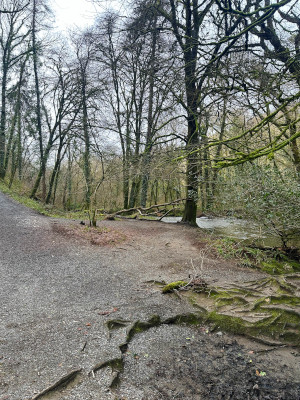 Scientific studies have repeatedly shown significantly reduced cortisol levels, during time spent in nature.
In fact, a notable Japanese experiment revealed that participants who walked in a forest for only 20 minutes, experienced a cortisol level decrease, of roughly 16% compared to those who walked in a city for the same duration and did an identical activity.
The Japanese term Shinrin-yoku translates roughly to “forest bathing,” which doesn’t involve swimming among the trees, but rather passively experiencing a forest with your senses engaged. This practice is now recognised by Japanese doctors, as a treatment for stress and anxiety.
Your brain literally becomes quieter: How nature stops rumination.
Over-activity of a brain region called the ‘subgenual prefrontal cortex‘, drives persistent, negative thinking patterns. The kind where worries loop incessantly, and can’t be broken free from. This state, known as rumination in CBT terminology, perpetuates anxiety and low mood long, after the initial trigger has subsided.
Researchers at Stanford university, found that participants who walked for 90 minutes in a natural setting, showed markedly reduced activity in this very brain area, compared to those who walked in a city. The nature walkers’ inclination toward rumination significantly decreased. The city walkers, however, showed no change.
It’s not solely psychological.
Spending time in nature has been shown to lower blood pressure, reduce heart rate, ease muscle tension, improve sleep quality, enhance immune function, and alleviate low mood.
 Trees, emit natural compounds called phytoncides. Phytoncides are their means of communication, and your body also reacts to them. Stress hormones decrease, and immune markers improve. Even a single visit to a woodland can boost your sleep for several days.
Your body recognises nature as a place of safety and can truly relax. Something it struggles to do in artificial environments like offices, supermarkets, or busy city streets.
And you don’t need a lot of it
Here’s what’s particularly worth remembering. Research from the University of Michigan, indicated cognitive improvements after a brief walk in nature. Other studies highlight 15-20 minutes as a key point for stress reduction, and no extended hikes, or days away are necessary. That’s just fifteen minutes!
Standing on the edge of a waterfall in the Brecon Beacons, I’ve felt the change happen in real-time. One minute I’m burdened by the week’s pressures, the next, it’s just water, mist, and the sound of something ancient. Something predating any of my worries.
This is more than just poetic phrasing, it’s your nervous system responding exactly as it was designed to.
This week’s task
For this week, I want you to pay close attention to nature’s impact on your body, not just on your emotions. We often recognise feelings, but overlook the physical signs that precede them.
Before your next trip outdoors, even if it’s just a short walk, do a quick body scan. Take about 30 seconds to notice if your shoulders are tense, if your jaw is clenched, or if your breathing is shallow and high in your chest, or deep and low in your belly. Just observe these without judgement.
When you return, do another body scan and make note of any changes. Write down a word, or two describing your observations.
Repeat this three times this week. By the third time, most people see a pattern, which is precisely the goal. You’re building evidence that this is effective, tailored to your body, and your life.
For those seeking more:
- Try walking the same route two days in a row: once with headphones listening to a podcast and once in silence. Compare how you feel afterwards.
- Identify the types of outdoor spaces that seem to resonate with you most-trees, open sky, water, or even tranquil streets.
- Record your observations somewhere. Your own findings will motivate you more than any research study.
Summary
- Nature exposure, leads to measurable reductions in the body’s stress hormone, cortisol, in as little as 20 minutes.
- Nature decreases activity in the brain region associated with rumination and negative thinking, a target for CBT.
- Physical benefits include lower blood pressure, muscle tension relief, improved sleep, and a bolstered immune system.
- Trees release phytoncides, natural compounds that trigger positive physiological responses in humans.
- A mere 15-20 minutes outdoors, is sufficient to yield significant benefits, making this a highly accessible daily practice.
Let me know how you get on.
