
Following on from last week, today I’ve decided to try to answer another question I get asked a lot.
The inverter.
Which inverter does my campervan need? There are two options that look almost the same on the shelf. Pure sine wave, or modified sine wave.
Here’s the short version: spend the extra money on pure sine wave. Let me explain why.
What’s the actual difference?
An inverter turns your battery’s 12V power into the 230V your appliances expect. How it does that, matters.
A pure sine wave inverter makes smooth, clean power. The same stuff that comes out of the wall at home. A modified sine wave inverter fakes it, producing blocky, stepped power that roughly looks like the real thing. Roughly.
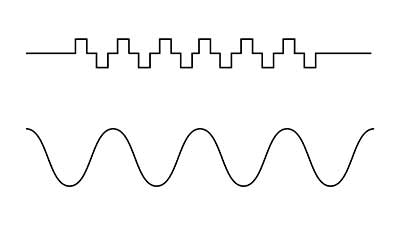
Some gadgets don’t mind. Others really do.
The comparison
Pure sine wave (1000W)
- 100% compatible with all standard AC devices
- Efficiency High. Appliances run happily
- Runs Silently
- Prices range from about £100 to £250
- Best for Most van builds
Modified sine wave (1000W)
- Simple stuff only. Can harm sensitive gear
- Lower efficiency (sometimes as much as 30%). More power is lost as heat
- Can be noisy with buzzing and humming
- Prices range from about £50 to £150
- Worth a look, if you’re on a very tight budget
Why pure sine wave wins
It’s safe for your gear. Laptops, phone chargers, camera battery chargers, LED lights. Anything with a little brain inside. Even a CPAP machine, if you rely on one. It all runs as it was designed to.
Motors love it too. Your compressor fridge, your water pump, the fan, the blender for morning smoothies. On clean power they run cooler and quieter, and they tend to last longer.
Then there’s the noise, or rather the lack of it. Ever had a speaker hum at you for no obvious reason? That’s often a modified sine wave. Pure sine wave stays quiet, which is rather the point of a van in the woods.
The downsides
Price. That’s the big one. A pure sine wave unit costs two to three times as much.
It can also sip a touch more power when it’s switched on with nothing plugged in. Modern ones are very good at this, though and many come with a separate control panel. Switch it off when you’re not using it and the problem disappears.
When a modified sine wave is fine
Let’s be fair. It has its place. It’s cheaper, and it handles simple heating loads without fuss. Think basic heating elements, old-style bulbs, a simple travel kettle under 1000W.
If that’s genuinely all you’ll plug in, it can work.
Where it goes wrong
Laptop chargers can overheat. So can power tool chargers. Coffee makers with timers or digital controls can struggle too.
Motors run hotter and use more battery, and some fail early. You might even see lines on a screen or hear a fan whine. Not ideal.
The campervan verdict
Your battery is precious. Every amp hour counts. A modified sine wave wastes some of it as heat, it hums, and it can put your expensive kit at risk.
So here’s where I land. Unless you only need to run a cheap phone adapter, maybe a lamp, or a cheap, low-wattage kettle, buy pure sine wave. You’ll spend a bit more now, and save yourself the hassle later.
